

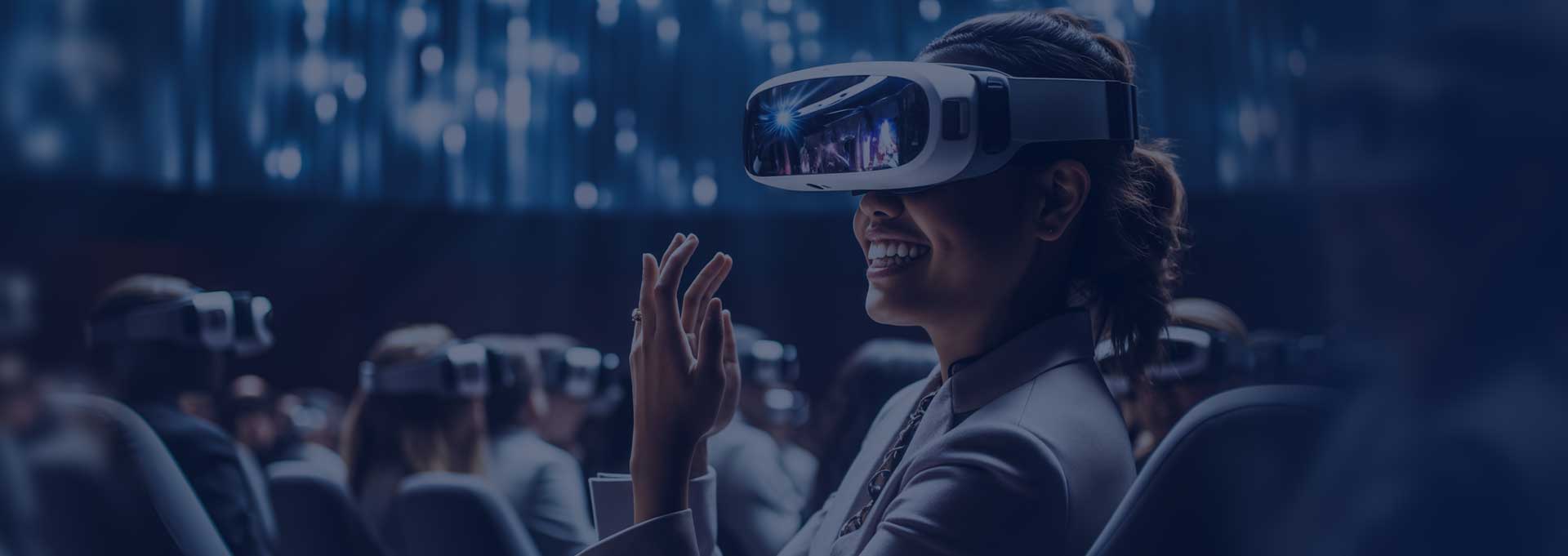
Unlocking Immersive Experiences: AR and VR in Live Events
In recent years, Augmented Reality (AR), Virtual Reality (VR), and Extended Reality (XR) have emerged as powerful tools for transforming the live event experience. A great real-world example is Coachella’s use of Augmented Reality (AR) during its live music festival. Attendees could interact with immersive AR experiences through their smartphones, enhancing the concert environment with virtual visuals and effects. This integration of AR created a more engaging and memorable experience for festival-goers, showcasing how AR can elevate live events.
The AR and VR market size is projected to grow to $296.9 billion by 2024. A study further estimates that immersive technologies will contribute $1.5 trillion to the global economy by 2030. But what lies behind this transformative technology, and how are organizations leveraging it to enhance live events? Let’s dive into the world of AR, VR, and XR in live events and explore its current landscape, benefits, challenges, and future.
The world of AR, VR, and XR
At its core, AR overlays digital elements—such as images, sounds, or animations—onto the real world, using devices like smartphones, tablets, or AR glasses. Think of an enhanced reality where virtual information supplements your physical environment. VR, on the other hand, creates a completely digital environment that users can explore through VR headsets. XR is an umbrella term that encompasses both AR and VR, along with other mixed reality experiences that blur the line between physical and digital worlds.
From immersive product demonstrations at trade shows to interactive fan experiences during live sports, these technologies offer an incredible opportunity to bridge physical distance and bring new layers of interactivity.
The current landscape of AR and VR in live events
Today’s live events are experiencing a digital renaissance. We invited experts from NBCUniversal, InfoVision, and Dow Jones Live Journalism to elaborate on their feats in adopting AR/VR technologies to take events to the next level.

These platforms have integrated AR into their broadcasts to bring viewers closer to the action, creating interactive, data-rich overlays that provide real-time updates on everything from player stats to weather conditions. Similarly, they have begun utilizing AR and VR in hybrid conferences, allowing both in-person and remote attendees to have similar immersive experiences.
The current landscape for AR and VR in live events revolves around creating more engaging, interactive, and personalized experiences for audiences. Whether it’s allowing a remote attendee to experience a front-row seat at a concert through a VR headset or offering AR-based interactive exhibits, this new reality has unlocked infinite possibilities for event organizers and marketers.
Hear all the real-time insights from the leaders in our very recent talk here: Unlocking Immersive Experiences AR and VR in Live Events
The benefits of immersive reality in live events
The benefits AR and VR bring to live events are immense.

1. Enhanced engagement
AR and VR keep attendees more engaged by offering interactive content, virtual tours, or gamified experiences.
2. Global reach
With VR, event organizers can expand their audience globally by allowing remote viewers to experience the event as if they were there in person.
3. Personalized experiences
AR allows for dynamic customization of content, enabling tailored experiences for each user based on their preferences and interactions.
4. Cost-effectiveness
Hosting virtual events reduces the cost of logistics, travel, and physical infrastructure.
5. Sustainability
Reduced need for travel and physical venue infrastructure can contribute to more eco-friendly events.
The technology behind the magic
The magic behind AR and VR is a combination of hardware, software, and data-driven content management.
• Hardware: VR headsets bring immersive environments to life. For live events, these devices enable users to experience an alternate reality, be it through attending a concert or walking through a virtual exhibition.
• Software: These platforms create the immersive worlds and interactions seen in VR or AR. For live streaming and integration, technologies like 5G ensure that high-definition content reaches audiences without lag or buffering, allowing for seamless experiences.
• Content management and distribution: Behind the scenes, powerful content management systems handle the dynamic distribution of AR/VR content. These systems ensure that live feeds, interactive elements, and user data are synchronized in real-time.
Sustainability and AR/VR technologies
As sustainability becomes a priority in global conversations, AR and VR technologies play a crucial role in reducing the carbon footprint of events. By minimizing the need for travel and physical infrastructure, AR/VR-powered virtual events allow companies to host large-scale events with minimal environmental impact. For instance, InfoVision’s recent hybrid conference reduced travel emissions by 60% by enabling attendees to participate virtually while offering immersive content through VR headsets.
Economic drivers and monetization strategies
The economic potential of AR/VR in live events is immense, offering various monetization options. Event organizers can sell virtual tickets for exclusive VR experiences, provide interactive sponsorships through AR ads, and offer virtual merchandising for attendees to shop seamlessly. Additionally, subscription-based models can generate recurring revenue by giving audiences long-term access to VR content.
The ethical aspect of AR and VR
While AR and VR present exciting opportunities, they also raise several ethical concerns. One of the most pressing issues is data privacy. With AR and VR collecting vast amounts of user data—such as biometrics, location, and preferences—there is a significant risk of misuse. Protecting user privacy in these immersive environments is paramount. Additionally, virtual environments can blur the line between reality and fantasy, potentially leading to psychological or social challenges.
For instance, in 2022, a concert organizer using AR inadvertently collected sensitive user data through interactive features without proper consent. This highlights the need for stringent privacy policies and transparent data practices.
Psychological impact
There are also concerns about the psychological impact of prolonged VR exposure. Studies show that VR can cause disorientation or “cybersickness” for some users, particularly during extended use. Moderating the time spent in these virtual environments and providing users with guidelines is essential to ensure a positive experience.
The future of AR/VR in live events
The future of AR and VR in live events is promising. With advancements in 5G technology and increasing accessibility of immersive hardware, the adoption of AR/VR in live events will only accelerate. By 2027, it is expected that 80% of businesses will use immersive technologies to enhance customer engagement at live events.
Looking ahead, InfoVision envisions a future where immersive, data-driven storytelling becomes the norm for live events. Explore more about these technological advancements here: Unlocking Immersive Experiences AR and VR in Live Events
In conclusion, AR, VR, and XR technologies are revolutionizing live events, offering immersive, sustainable, and economically viable experiences. As these technologies continue to evolve, they hold the potential to transform the way we perceive and interact with events, driving engagement and innovation across industries.
Stay tuned to the technology developments; Join our intriguing discussions by registering here: Webinars – AICorespot


