


Transforming Patient Care: Harnessing Analytics, AI, and Technology for a Smarter Healthcare Ecosystem
The convergence of artificial intelligence (AI), machine learning (ML), and advanced data and analytics is reshaping the healthcare industry. These technologies not only elevate patient care by enhancing operational efficiencies but also drive better health outcomes and enable data-driven decision-making.
The AI-powered Targeted Real-Time Early Warning System (TREWS), developed by researchers at Johns Hopkins University, has reduced sepsis mortality rates by over 20% in trial implementations (Johns Hopkins University The Hub ps:/ New Atlas du/2022/07/21/artificial-intelligence-sepsis-detection/). Sepsis is a severe response to infection that can lead to organ failure and death if not detected early. TREWS combines patient medical histories, symptoms, and lab results to identify individuals at risk for sepsis, enabling faster intervention.
Eager to uncover industry insights, we turned to healthcare experts to explore what challenges and innovations are currently dominating their agendas.
Watch the complete conversation here: Driving Healthcare Innovation through Data Analytics and AI
This blog delves into how healthcare organizations can leverage these innovations to build a smarter, more connected ecosystem. Read through to discover actionable strategies, real-world examples, and expert perspectives shaping the future of healthcare.
A key driver of this transformation is AI and large language models (LLMs).
The role of AI and LLMs in patient care
AI and large language models (LLMs) have opened new avenues for improving patient care and service delivery. Predictive diagnostics, personalized treatment plans, intelligent virtual assistants, and AI-powered solutions streamline workflows and reduce the burden on healthcare providers. For instance, AI-driven chatbots can triage symptoms, provide initial assessments, and direct patients to appropriate care pathways.
Moreover, LLMs like ChatGPT aid medical professionals by quickly summarizing clinical notes, identifying anomalies in patient records, and recommending evidence-based treatment options. These innovations empower providers to deliver faster, more accurate, and efficient care.
As these technologies advance, they enhance patient care outcomes while streamlining workflows and improving operational efficiency across healthcare organizations. However, integrating AI with existing systems is crucial to fully unlocking these benefits, ensuring seamless adoption and maximum efficiency.
Integrating AI with existing systems
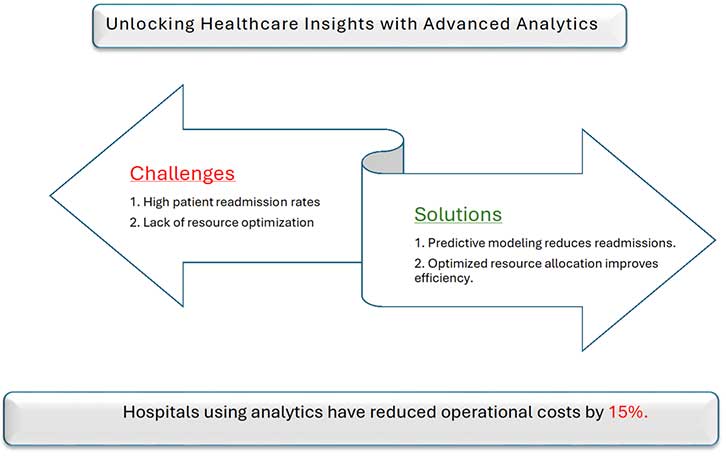
For AI to realize its full potential, seamless integration with existing Electronic Health Record (EHR) systems is critical. Best practices include using interoperable platforms, ensuring data compatibility, and prioritizing user-friendly interfaces for clinicians. For example, incorporating AI algorithms into EHR workflows can help flag high-risk patients or predict readmission probabilities, enabling proactive interventions.
A real-world example involves a hospital system adopting AI for radiology imaging analysis. By integrating AI models into its EHR, radiologists were able to detect early-stage diseases with a 20% higher accuracy, reducing misdiagnosis rates and improving patient outcomes.
Stay tuned to our panel discussions to receive the latest technology bites: Webinars – AICorespot
That said, implementing AI solutions in healthcare requires robust data governance strategies to ensure compliance with regulations like HIPAA.
Ensuring data governance and mitigating risks
Organizations must prioritize data protection measures such as encryption, anonymization, and secure access controls. Addressing risks such as bias in AI algorithms and ensuring ethical usage is equally essential.
Training healthcare teams on AI risk management is a vital step. Programs that teach staff about AI’s capabilities, limitations, and compliance requirements can bridge knowledge gaps and instil confidence in using these tools effectively.
Unlocking analytics for operational and population health gains
AI and advanced analytics play a pivotal role in reducing operational costs and improving health outcomes. Predictive analytics can optimize resource allocation, while machine learning algorithms can analyze patient data to forecast disease outbreaks and manage population health.
For example, analytics of social determinants of health (SDOH) can help healthcare organizations identify patients at risk of prolonged hospital stays or frequent readmissions. By addressing factors like housing, nutrition, and access to care, providers can enhance overall hospital capacity and reduce the length of stays.
Explore strategies for optimizing treatment plans and tailoring care to individual patient needs; Hear this conversation now: Improving Quality of Care through Health Data Analytics
Advancing genomics-driven personalized medicine
Genomics-driven personalized medicine is another breakthrough made possible by AI. With the ability to analyze vast genomic datasets, AI algorithms help identify genetic markers linked to diseases, enabling targeted treatments. This approach not only improves patient outcomes but also reduces trial-and-error in treatments.
Soon, AI’s role in genomics will expand further, fostering innovations in gene therapy, rare disease diagnostics, and cancer research.
While the promise of AI is immense, implementing it comes with its own set of challenges. From regulatory compliance to workforce training, addressing these hurdles is crucial for driving widespread adoption and sustained impact.
Overcoming challenges and building analytics capabilities
Deploying AI solutions across multiple healthcare functions comes with its share of challenges. These include resistance to change, lack of technical expertise, and legacy system constraints. Strategies to overcome these hurdles include fostering a culture of innovation, enhancing data quality, and scaling analytics capabilities incrementally.
Fostering responsible analytics innovation
Balancing innovation with governance is crucial. Responsible analytics use involves ensuring transparency, accountability, and adherence to ethical standards. Healthcare leaders must prioritize security measures like multi-factor authentication and real-time monitoring to protect patient data while enabling analytics innovation.
Emerging technologies such as predictive analytics, natural language processing, and computer vision are showing tremendous promise in healthcare. Building capabilities around these tools requires continuous investment in training, infrastructure, and collaborative partnerships.
Understand this transformation better; watch this discussion with industry experts now: Transforming Healthcare Through Cutting-Edge Technology
Preparing for the future of healthcare analytics
The future of healthcare analytics lies in real-world evidence, predictive modeling, and AI-enhanced decision-making. Trends such as real-time monitoring, wearable technologies, and decentralized care models will further shape this landscape.
To prepare for these advancements, organizations should focus on fostering a data-driven culture, ensuring seamless integration of new technologies with legacy systems, and investing in upskilling their workforce. By doing so, healthcare systems can unlock the full potential of analytics and AI, driving better outcomes for patients and providers alike.
As healthcare innovation continues to advance, partnerships across the industry and the effective integration of AI technologies will be pivotal in overcoming obstacles and driving transformative progress. The potential of AI and analytics in healthcare is vast, offering opportunities to revolutionize care delivery, streamline operations, and create a more connected and adaptive ecosystem.
Delve deeper into these advancements in our discussion: Driving Healthcare Innovation through Data Analytics and AI


