


Best Practices for Crisis Communication in a Digital-First World
Effective crisis communication has never been more critical in today’s digital-first landscape, where information travels faster than ever. Breaking news can reach millions within minutes due to social media, with platforms like Twitter sending over 500 million tweets daily, making rapid and accurate communication essential.
The stakes are high, as mishandled crises can lead to severe brand and reputational damage. We invited the experts in the field, including Cassin Duncan from InfoVision, Steven Kelly from Santen, Ann Barlow of Ruder Finn, and Aleisia Gibson Wright of GW Health PR to explore best practices for crisis communication in a digital-first world. This blog expands the conversations broken down into core components.
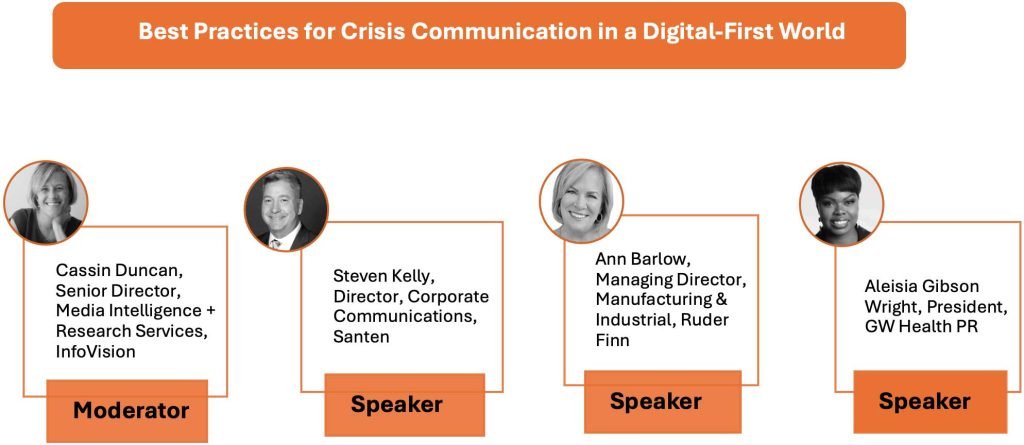
All the speakers affirmed that proactive preparation is the first step towards successfully managing crises and ensuring clear, effective communication when it matters most.
1. Proactive preparation
Organizations with a comprehensive crisis communication plan report are 2.5 times more likely to handle digital crises successfully, according to industry surveys, highlighting the importance of preparation and strategy. So, one of the most critical aspects of crisis management is preparing well before any crisis. This involves
• Scenario planning
Identifying potential threats and crafting responses for different crisis scenarios. Research suggests that 70% of organizations face at least one crisis every five years, yet only 47% have crisis communication plans.
• Clear crisis communication plan
A documented strategy that includes key stakeholders, communication channels, messaging guidelines, and escalation procedures.
• Training and drills
Regular crisis simulations help ensure that everyone understands their role and can respond swiftly. For instance, companies like Southwest Airlines conduct regular drills to practice real-time responses, enhancing team readiness.
• Crisis response team
Forming a dedicated crisis team that includes PR, legal, executive, and operational members ensures quick decision-making and minimizes internal chaos during a crisis.
2. Digital and social media strategies
In a world where 4.9 billion people use social media, platforms like Twitter and Facebook have become crucial for disseminating timely information. Here are the key tactics:
• Rapid response
Companies that respond to crises within the first 24 hours are more likely to preserve their reputation and recover faster, with some studies indicating that early responses can reduce damage by up to 30%. In fact, during a crisis, responding within the first 15 minutes is crucial to control the narrative.
For instance, Nike’s response to a manufacturing scandal was immediate, issuing transparent updates and initiating corrective actions, thereby reducing reputational damage.
• Consistent messaging
Ensuring consistency across all digital channels reinforces credibility and avoids confusion.
• Listening tools
Utilizing tools like Hootsuite or Brandwatch helps monitor public sentiment and detect misinformation. Companies with active listening systems can catch negative sentiments early and respond more effectively.
• Content adaptation
Use each platform’s strengths. Twitter, for example, is ideal for quick updates, while Instagram can be leveraged for visually driven communication and behind-the-scenes stories that showcase empathy and transparency.
3. Internal vs external communication strategies
Balancing internal and external communication is essential to avoid mixed messages and keep all stakeholders informed.
• Internal communications
Employees are often the first to experience the crisis impact, so it’s essential to keep them informed. An example is Starbucks’ response to a racial bias crisis, where they prioritized employee briefings and even held company-wide training to address concerns.
• External communications
Addressing the public, customers, and media with transparent and fact-based information should be prioritized. External messages should convey empathy, clarity, and accountability. For instance, when data breaches occur, companies like Target have responded with timely public statements and have offered resources to help affected customers secure their information.
4. Owned, earned, and paid media strategies
In a crisis, organizations need a comprehensive media strategy encompassing owned, earned, and paid channels:
• Owned media
Use the company’s website, blog, and social media pages to release official statements. This allows for message control and swift updates, ensuring accuracy.
• Earned media
Engage with trusted journalists and influencers to share your side of the story. That said, building relationships with media before a crisis can help amplify messages when they are needed most. Uber, for instance, used earned media relationships to mitigate the fallout from regulatory issues in various cities.
• Paid media
Using paid ads can help control visibility for crisis-related messages. For example, during the COVID-19 pandemic, several airlines used paid social media ads to reassure customers about their health and safety protocols.
5. Measurement and community engagement
Measuring response effectiveness is crucial to refining strategies for future crises.
• Key Performance Indicators (KPIs): Track engagement rates, sentiment analysis, and message reach across digital platforms. Research shows that 60% of companies fail to track KPIs post-crisis, which hinders their ability to improve.
• Community engagement: Encouraging feedback and addressing concerns demonstrates that the organization values public opinion. Moreover, community engagement also helps to rebuild trust after the crisis has passed. For example, after a major crisis, the company Johnson & Johnson opened community channels to gather consumer feedback on product safety concerns.
6. AI and technology in crisis
AI tools have revolutionized crisis management, from predictive analytics to real-time monitoring:
• Predictive analytics: AI can analyze social and media trends to identify potential risks before they escalate. Machine learning models, for example, can detect when public sentiment begins to shift, giving companies a head start.
• Chatbots and automation: Automated tools handle a large volume of inquiries during a crisis, providing real-time responses to common questions. For instance, during natural disasters, government agencies use chatbots to manage community inquiries, freeing up human resources for more complex issues.
• Data analysis for sentiment monitoring: Companies can leverage AI tools to analyze the sentiment in digital communications. This can guide messaging adjustments and ensure alignment with public expectations.
7. Long-term reputation and future trends
Building and maintaining a strong reputation post-crisis is an ongoing effort. And maintaining a strong reputation post-crisis requires consistent follow-up efforts.
• Transparency and accountability
Being transparent about the cause of the crisis and how it is being addressed can mitigate long-term damage. Research shows that 83% of consumers appreciate brands that admit mistakes and take corrective action.
• Reputation-building campaigns
Consider campaigns that highlight positive initiatives post-crisis, such as community service or sustainability efforts.
• Future trends
Looking forward, the role of AI in crisis communication will expand, enabling even quicker responses and deeper insights into public sentiment. Furthermore, augmented reality (AR) is expected to become a part of communication strategies, with brands like Ikea using AR to provide immersive experiences that can enhance transparency and customer engagement.
Thus, in a digital-first world, the convergence of technology and strategy is essential for crisis management. By following these best practices, organizations can not only weather the storm of a crisis but also come out stronger and more resilient on the other side.
Immerse yourself in the world of AI innovation with AICorespot—a hub offering deep insights, the latest trends, and transformative breakthroughs in artificial intelligence.


